A single 5-minute, non-invasive bedside CardiAQ scan has the potential to enable more confident triage for emergency departments managing gray-zone patients.

CAUTION Investigational device. Limited by Federal (or United States) law to investigational use.
AQMed is developing magnetocardiography technology that combines high-performance magnetic sensors with AI-powered signal processing to explore faster, more confident cardiac assessment.
Millions of patients present to emergency departments with chest pain each year, yet many remain in the diagnostic “gray zone,” making rapid and confident triage a persistent clinical challenge.
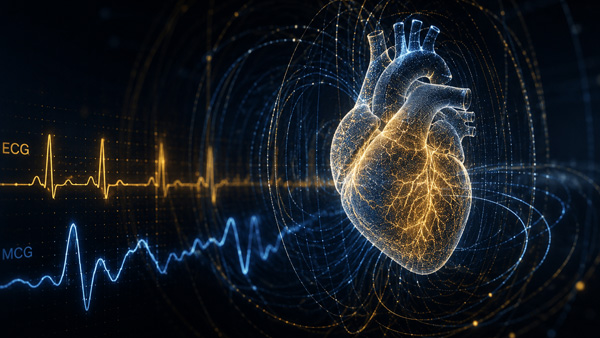
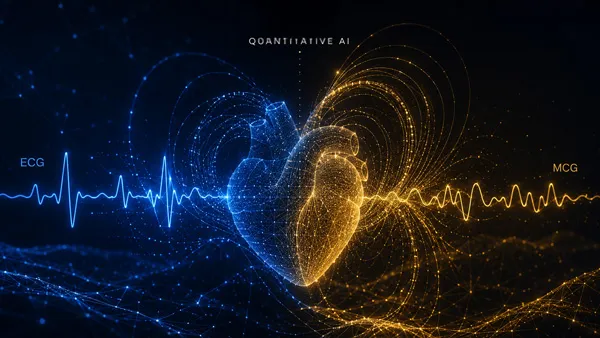
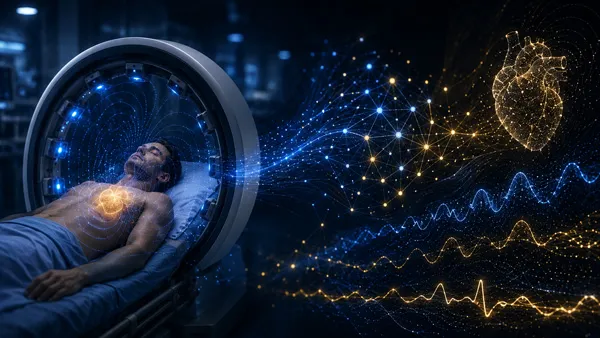
Magnetocardiography (MCG) is a non-invasive technology for imaging the heart’s electrophysiology. By measuring the magnetic fields produced by the heart’s electrical activity—which pass through tissue undistorted—MCG has the potential to reveal ischemic signals that standard tools like ECG may miss. CardiAQ combines advanced magnetic sensing, AI-powered Large Quantitative Models (LQMs), and electromagnetic interference rejection designed to support rapid detection of ischemia and high-risk coronary artery disease (HRCAD).
Measures the heart’s magnetic fields, which pass through tissue undistorted and may reveal ischemic signals that standard ECG may miss.
Engineered to operate in standard clinical environments without cryogenic cooling or specialized infrastructure.
Combines advanced magnetic sensing with AI-enabled data analysis to help translate complex cardiac signals into clear, clinically relevant insights.
5-minute, non-invasive, radiation- and contrast-free scan designed for use by trained clinical staff in routine care settings.
CAUTION
Investigational device. Limited by Federal (or United States) law for investigational use
AQMed is committed to clinical excellence through partnerships with leading academic medical centers, including Mount Sinai and Mayo Clinic. Our ongoing clinical studies are evaluating the performance of CardiAQ in detecting ischemia and acute coronary syndrome (ACS), with an initial focus on high-risk coronary artery disease (HRCAD). Together, these studies are building the clinical evidence needed to advance cardiac care at the point of care.
Results from Our Clinical Partners


Case Study
Study participant 035
The Cost of Delay: Active ischemia can be invisible to standard tests, risking catastrophic cardiac events hours after discharge.

Patient presented to the emergency department with chest pain requiring evaluation for a potential acute cardiac event.
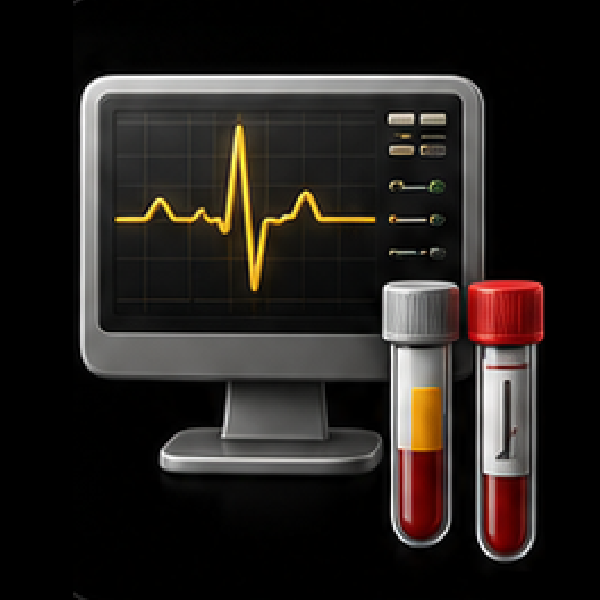
ECG and troponin testing were negative, with no indication of acute coronary syndrome (ACS).
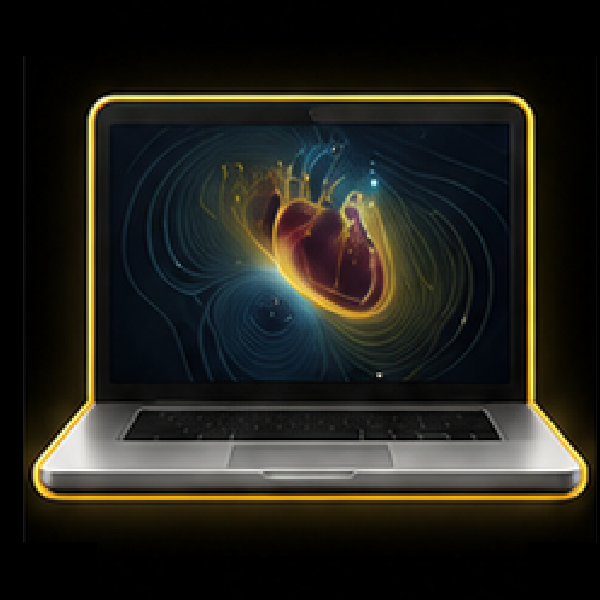
An investigational CardiAQ MCG scan was completed in approximately 5 minutes. Results were not used for clinical care.

Based on conventional testing, the patient was discharged with a diagnosis of GERD.
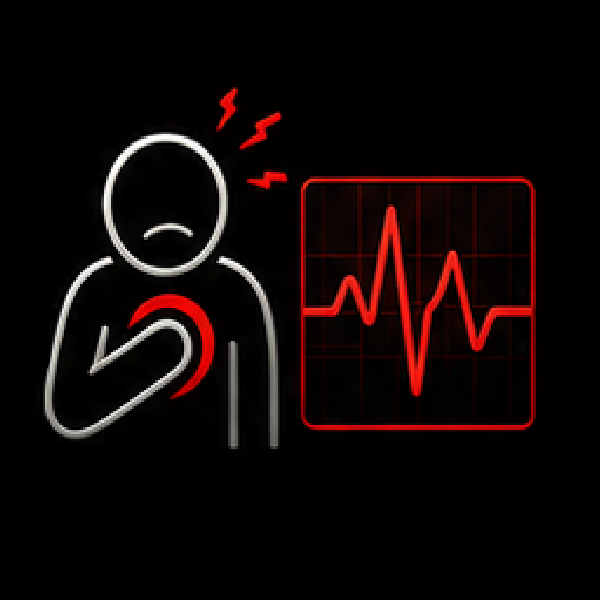
The patient returned with severe chest pain. A repeat ECG confirmed STEMI.
Outcome: 100% Mid-LAD occlusion. Patient received 4 stents.
MCG Advantage
A 5-minute, non-invasive MCG scan could reveal the heart’s unique magnetic signature. Preliminary retrospective analysis suggests this patient could have been identified as abnormal nearly 6 hours earlier.
423 participants scanned, 0 adverse events
Patients presenting to the ED with chest pain symptoms suggestive of ACS not experiencing STEMI
Patients scanned
Sensitivity*
Specificity*
https://www.jacc.org/doi/full/10.1016/j.jacc.2026.02.2965
*Excluding subjects diagnosed with cardiac disease other than occlusive ischemia
Patients scheduled for diagnostic angiography or revascularization for ischemia / acute MI
Patients scanned
Sensitivity
Specificity
Partner on clinical research. We collaborate with academic medical centers, health systems, and research institutions to advance magnetocardiography and cardiac diagnostics. If you’re interested in partnership or research opportunities, we’d love to hear from you.
We're hiring physicists, ML engineers, biomedical scientists, and clinical operations specialists. Come apply quantum technology and AI to one of medicine's most important unsolved problems.

Inside SandboxAQ: Building Frontier Medical Technology

My AQ Journey | Christian Nguyen

Beyond the EKG: Using Quantum Sensors to Detect Heart Attacks
From the Lab to Hospital Bedside: How Magnetic Fields Can Detect Heart Attacks Faster
Rebuilding Heart Signals from Noise: The Science Behind SandboxAQ’s MCG Device

AQMed: The Future of Cardiac Diagnostics
How CardiAQ Works — Technical Demo
Abstract 4140246: AI and Quantum Sensors: Realization of a Safe and Effective Unshielded Bedside Magnetocardiogram to Detect Ischemia in the Emergency Room
Abstract 15392: Performance of a Novel Unshielded Magnetocardiography Device in a First-in-Human Study

Bedside Magnetocardiography with a Scalar Sensor Array
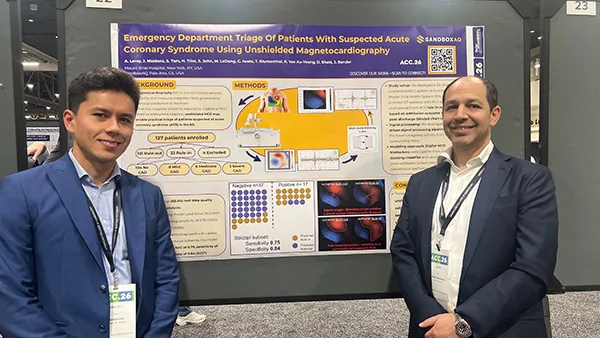
26-A-11705-ACC EMERGENCY DEPARTMENT TRIAGE OF PATIENTS WITH SUSPECTED ACUTE CORONARY SYNDROME USING UNSHIELDED MAGNETOCARDIOGRAPHY

26-A-11614-ACC MACHINE LEARNING-BASED DETECTION OF CORONARY ARTERY DISEASE USING UNSHIELDED MAGNETOCARDIOGRAPHY
Magnetocardiography (MCG) is a non-invasive cardiac imaging technique that measures the magnetic fields produced by the heart’s electrical activity. Because these magnetic fields pass through tissue undistorted, MCG has the potential to reveal ischemic signals that standard ECG may miss.
CardiAQ uses high-performance sensors to detect magnetic signals from the heart that are invisible to a standard EKG. Combined with AI-powered Large Quantitative Models (LQMs), CardiAQ could identify cardiac abnormalities earlier, without requiring skin contact, conductive gel, or electrode placement.
No. CardiAQ is designed to operate in standard clinical environments. Its sensor technology and AI-powered noise cancellation algorithms eliminate the need for expensive shielded rooms, a major barrier for previous MCG systems.
CardiAQ is currently an investigational device. It has not yet been cleared or approved by the FDA. AQMed is actively conducting clinical studies to support a future regulatory submission.
We collaborate with academic medical centers, health systems, cardiology practices, and research institutions. If you're a cardiologist, clinical researcher, or hospital innovation lead, we welcome partnership inquiries.
AQMed has active research collaborations with Mount Sinai West and Mayo Clinic. Additional clinical sites are being evaluated for future studies.
AQMed is the medical diagnostics business unit of SandboxAQ, a company focused on AI and quantum technology applications. AQMed leverages SandboxAQ's expertise in Large Quantitative Models (LQMs) and advanced sensing to develop next-generation cardiac diagnostic tools.
Investigational Device
CardiAQ is an investigational device. Limited by Federal law to investigational use. It has not been cleared or approved by the U.S. Food and Drug Administration (FDA). It is not available for commercial sale or clinical use. The information on this page is intended for research and educational purposes only and does not constitute medical advice.