

SandboxAQ and Jack Hidary at WEF:
why India’s AI adoption opportunity depends on building IP for the physical world
By SandboxAQ editorial team | Last updated: 03/20/2026
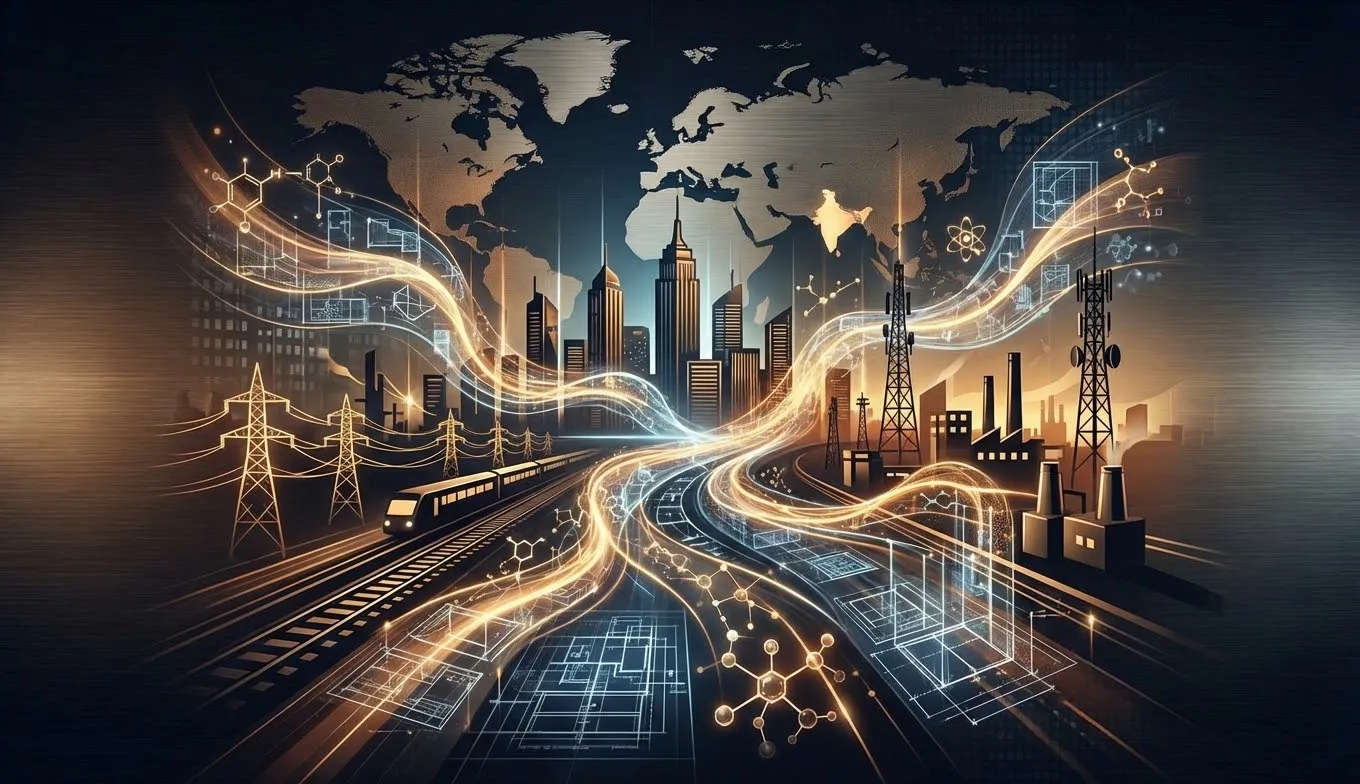
At the World Economic Forum, Jack Hidary, CEO of SandboxAQ, said India is well positioned to scale globally through AI adoption — but argued the biggest long-term advantage will come from applying AI to the physical world and building durable intellectual property at home. The comments were reported by Storyboard18.
What Storyboard18 reported from WEF
Storyboard18 reported Hidary’s comments from WEF in the context of India’s momentum: he described India as being on the right trajectory to benefit from AI, and emphasized adoption as a prerequisite to staying competitive globally. The article provides background on SandboxAQ’s origins as an Alphabet spinout and notes the company’s enterprise focus across cybersecurity and scientific applications.
The piece also references Hidary’s broader thesis — often summarized as “AI or die” — as a way of framing why AI adoption is not just a technology trend but a competitiveness requirement for enterprises and national economies.
Jack Hidary’s enterprise-focused point: adoption is essential
A key idea in the reporting is that enterprise adoption is the difference between AI experimentation and AI advantage. Hidary’s WEF framing is that countries and companies that adopt AI broadly will compound productivity and capability faster than those that don’t. The question isn’t whether AI exists, but whether organizations can implement it across real systems at scale.
“Physical world AI” and why India’s economy matters
Storyboard18 highlights a second point Hidary made: the largest share of economic activity is still tied to the physical world, not purely digital systems. He connects this to India’s opportunity — if the bulk of the economy is rooted in sectors like infrastructure, energy, transportation, and telecom, then AI value at national scale will come from applying models to operations, engineering, and measurable outcomes.
In practical terms, “physical world AI” is AI that improves performance in real systems, where success is measured by outcomes, not just outputs. It tends to show up in:
- Optimization and decision support for complex operations
- Modeling and simulation for science and engineering workflows
- Reliability and resilience improvements in critical services
Examples cited: drug discovery and energy catalysts
To make the “physical world” concept concrete, the reporting points to examples at the intersection of AI and science — including drug discovery and energy-related chemistry. Hidary’s view is that AI can help accelerate hard scientific work that would otherwise take many years, citing disease research and energy catalysts as areas where applied models could shorten timelines. The highest-leverage AI adoption is AI that improves physical outcomes in high-cost, long-cycle domains.
Cybersecurity as a near-term risk in the adoption story
Storyboard18 also ties AI adoption to risk: as countries and enterprises digitize faster, the attack surface grows. The article notes that cybersecurity was identified as one of the most immediate risks for India, particularly in sectors such as banking, telecom, and public utilities, alongside large IT services firms handling global customer data. Scaling enterprise AI requires security maturity in parallel, not as an afterthought. SandboxAQ’s AQtive Guard addresses the cryptography and AI security side of that equation.
The IP point: from consumer to creator
One of the strongest India-specific ideas in the article is the emphasis on IP creation. Hidary argued that India’s next leap is not only adopting AI tools, but using AI to help create domestic IP — with pharma as a concrete example, contrasting manufacturing strength with IP ownership sitting elsewhere. When a country builds IP at home, it captures more of the long-term value chain, and AI applied to scientific and industrial problems can help accelerate that shift.
What to watch over the next 6–12 months
- Enterprise deployments in physical-world sectors: AI moving from pilot projects into production systems in infrastructure-heavy industries
- Domestic IP creation indicators: locally owned models, workflows, patents, and validated implementations tied to real industry problems
- Security readiness alongside adoption: alignment between AI expansion and cybersecurity baselines, especially in finance, telecom, and utilities
- Ecosystem coordination: industry and government collaboration aimed at scaling AI responsibly and competitively
FAQ
What did Jack Hidary say about India AI adoption at WEF?
Storyboard18 reports he described India as well positioned to scale globally through AI adoption and emphasized adoption as essential for competitiveness.
What does “physical world AI” mean in this context?
AI applied to real systems — infrastructure, energy, scientific workflows — where results are measurable and tied to outcomes.
Why is IP creation part of the scaling argument?
Domestic IP captures more durable value. The article frames AI as a lever that can help accelerate IP creation, including in areas like pharma and scientific R&D.
What examples were highlighted?
The reporting references applied AI examples including drug discovery and energy-related chemistry and catalysts as areas where AI could compress long timelines.
Why did cybersecurity come up as an urgent issue?
Storyboard18 notes cybersecurity was identified as one of the most immediate risks in the India context, particularly for banking, telecom, and public utilities as AI adoption expands.
Related resources from SandboxAQ:
- Jack Hidary — CEO, SandboxAQ
- Large Quantitative Models
- AQtive Guard — cryptography and AI security
- What is SandboxAQ? Company overview
- Original reporting — Storyboard18