Nearly half of U.S. counties don’t have a single cardiologist. For millions of rural Americans, geography, not medicine, still determines whether they survive a heart attack.
If you live in a rural community in America, your chances of surviving a heart attack are shaped by something rather arbitrary: your zip code. Nearly half of all U.S. counties – many of them rural – don’t have a single cardiologist, leaving 22 million people without timely access to specialized cardiac care. For a patient in crisis, that can be the difference between life and death.
Consider Chuck Wendel, who was 58 years old and living in North Dakota when he collapsed during a basketball game from a heart attack and went into cardiac arrest. His survival depended on a string of lucky breaks. First, his teammates knew CPR, which kept blood flowing long enough for someone with knowledge of using an automated external defibrillator (AED) to intervene. Second, he was fortunate enough to get a helicopter flight to Fargo for emergency stent procedures. Had his heart given out while he was home on his 600-acre farm, miles from help, the story might have ended differently.
These aren’t rare anecdotes. They reflect a larger truth: in rural America, where 20% of the U.S. population lives, the odds of surviving heart disease can be drastically different than the rest of the country.
Cardiovascular disease remains the leading cause of death in the U.S., yet access to cardiologists is shrinking. The American College of Cardiology (ACC) projects a shortage of trained cardiac specialists for two reasons: supply and demand. On the supply side, fewer physicians are entering cardiology as a specialty because of the years of training required, a perceived lack of work-life balance, and increased administrative burdens. On the demand side, people are living longer, but becoming sicker along the way. As a result, the ACC expects the cardiologist-to-patient ratio to increase from one for every 1,087 patients in 2025 to one for every 1,700 patients by 2035. To further compound the situation, 26.5% of cardiologists in 2019 were 61 years of age or older.
This situation especially impacts the rural aging population, which has elevated rates of diabetes, hypertension, and obesity, the very conditions that require specialized cardiac care. The result is a widening gap in outcomes. In recent years, cardiovascular death rates among rural adults (ages 25–64) rose by 21%, while that same age group in urban populations only experienced a 3% jump.
Eighty-six percent of rural counties have no cardiologist at all, and patients travel an average of 87 miles round-trip for care compared to just 16 miles in urban centers.
For heart attack patients, every minute matters. Rural patients with ST-elevated myocardial infarction (STEMI) who can’t get treatment within the critical 90-minute window are four times more likely to die than their urban counterparts.
Emergency response times only worsen the problem. In many rural areas, ambulances are staffed by volunteers, and response times run 30% longer than in cities. As one North Dakota flight nurse put it: Even when you call 911, the ambulance may arrive too late simply because of long distances.
Native American communities bear the heaviest burden. They are more likely to live in counties without cardiologists, experiencing heart disease at rates 50% higher than white Americans, according to some estimates.
This heatmap from the ACC visualizes the health equity disparities described above.
Telecardiology surged during the pandemic, rising from less than 1% to more than 70% of cardiology visits. Studies showed that remote monitoring can cut hospital readmission rates while reducing costs and wait times, and can therefore serve as an effective tool. Of course, this doesn’t benefit those in need of immediate care, but given that cardiovascular disease is often a chronic problem, knowing that telemedicine can further reduce the healthcare burden makes it a promising technology in cardiac care.
When it comes to screening, other models show promise, too. Iowa’s “visiting consultant” clinics bring urban cardiologists to rural towns, reducing average drive times from 42 to 15 minutes for over a million residents. The Veterans Administration’s hub-and-spoke system has successfully delivered home-based cardiac rehab to thousands of veterans in rural areas.
The economic case for action is strong. Visiting specialist programs cost about $400,000 annually per region, far less than the billions lost to preventable hospitalizations and premature deaths. Investing in rural broadband to enable telemedicine is cheaper than funding helicopter evacuations. Training nurse practitioners in cardiac care costs a fraction of recruiting new specialists.
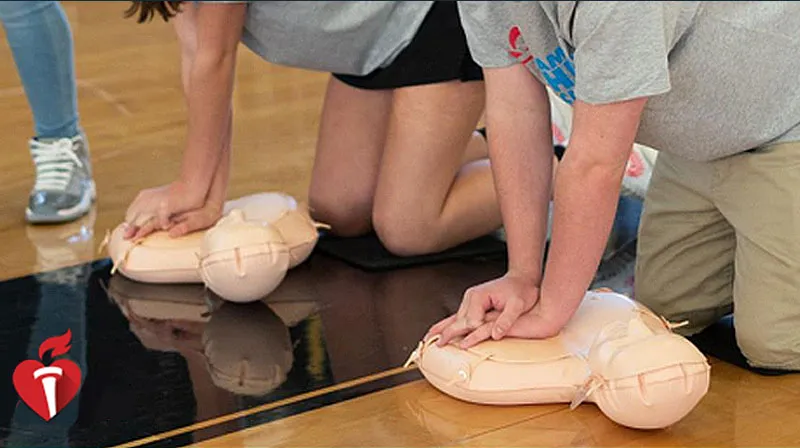
Some community-based programs are training citizens in CPR and distributing AEDs, turning entire towns into first-response networks, much like the impromptu one that saved Chuck Wendel’s life twenty years ago. These initiatives will arm the community with life-saving skills for when an emergency arises.
Beyond economics, there is a moral imperative. Behind the statistics are people like Chuck Wendel, who survived because luck and community effort aligned. This suggests that community-based interventions can not only be effective, but are simply the right thing to do. CPR and AED training can give patients a fighting chance to survive an otherwise fatal event.
Our company is already backing community-based initiatives like this. With our local sponsorship, the American Heart Association will provide one “CPR in Schools Training Kit”™ with hands-on education and training through Kids Heart Challenge annually to empower students to learn the lifesaving skills of CPR in just one class period. The training kit also teaches AED use and choking relief. Through this training, we can double or triple a person’s chance of survival. SandboxAQ is sponsoring the American Heart Association to save and improve lives in the Greater Bay Area by teaching the next generation how to respond in a cardiac emergency.
Rural Americans deserve the same shot at surviving heart disease as anyone else. The solutions exist. The benefits are clear. What remains is the will to act before more lives are lost to a crisis we already know how to solve.

