The limits of today's methods should never become the limits of your scientific ambition.
SandboxAQ's Large Quantitative Models are a new class of AI combining machine learning with physics-based simulation to extend what you can rigorously investigate.
You decide what deserves to go further.
Find scientific insights and evidence to help investigate unfamiliar molecules when existing data is limited.
A novel molecule raises questions that existing data may not answer. SandboxAQ combines machine learning with physics-based simulation to help your team investigate how molecules might interact with a target before deciding which possibilities warrant laboratory testing.
Gain scientific context to assess unfamiliar possibilities within your existing discovery workflow and prioritize the next experiment.

Limited data on unfamiliar molecules can make their potential harder to assess. SandboxAQ’s physics-based simulation and quantitative predictions help your team investigate molecular interactions and consider which possibilities merit closer study.

When considering unfamiliar molecules, confidence depends on how a prediction was tested. Examine the methods, experimental findings and limitations in SandboxAQ’s research to assess the evidence behind the approach.

Deciding what to test requires evidence about the possibilities you are considering. SandboxAQ helps your team assess potential discovery pathways and prioritize laboratory investigation.
The range of possible molecules makes discovery an ambitious scientific undertaking. A theoretical estimate shows the scale of that possibility; a specific research project illustrates a wider scope of investigation with SandboxAQ.

possible molecules make up the estimated theoretical drug-like chemical space, illustrating the scale of possibilities facing discovery scientists.
Source: Jean-Louis Reymond, The Chemical Space Project. Accounts of Chemical Research, 48(3), 722–730, March 17, 2015. American Chemical Society. DOI: 10.1021/ar500432k.
were included in the chemical exploration space in a project with UCSF’s Institute for Neurodegenerative Diseases using SandboxAQ’s platform, expanding the scope from 250,000.
Source: SandboxAQ, Drug Discovery webpage, What Our Partners Are Saying. Account attributed to Dr. Stanley Prusiner, UCSF. Accessed October 5, 2026.Scientific leaders across computational chemistry, computational biology and drug discovery need evidence to assess unfamiliar molecules and potential discovery pathways. SandboxAQ helps them investigate possibilities and prioritize experiments.
That evidence also informs discussions with portfolio leaders, scientific evaluators and innovation colleagues.

SandboxAQ helps scientific and portfolio leaders investigate unfamiliar molecules across discovery programs and assess which pathways warrant laboratory effort. Scientific evaluators can examine the supporting methods and findings to inform those decisions.

With SandboxAQ’s physics-based simulation and quantitative predictions, discovery and computational science leaders in mid to large biotech companies can assess unfamiliar molecular possibilities and prioritize experiments within available laboratory resources and program budgets.
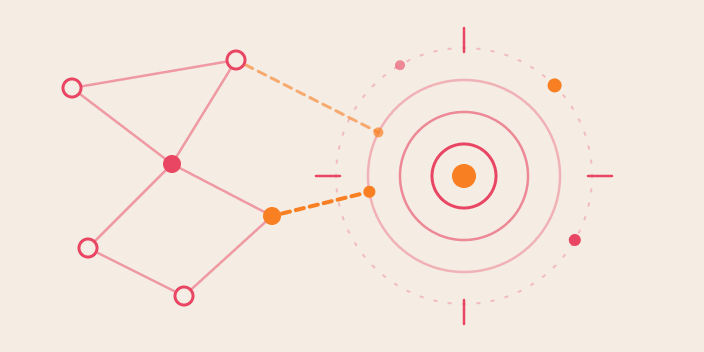
Scientific leaders and evaluators can use SandboxAQ to investigate molecular interactions relevant to complex biological questions, novel targets and therapeutic opportunities. The scientific context helps them assess which directions merit further investigation.
Find scientific insights and evidence to help assess unfamiliar possibilities when existing data is limited.
Review the methods used and results observed in SandboxAQ's drug discovery research. The study below shows computational investigation followed by laboratory testing in a setting with limited structural information.